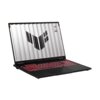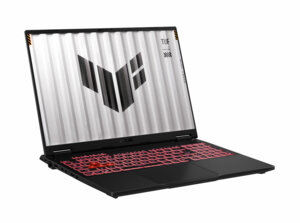


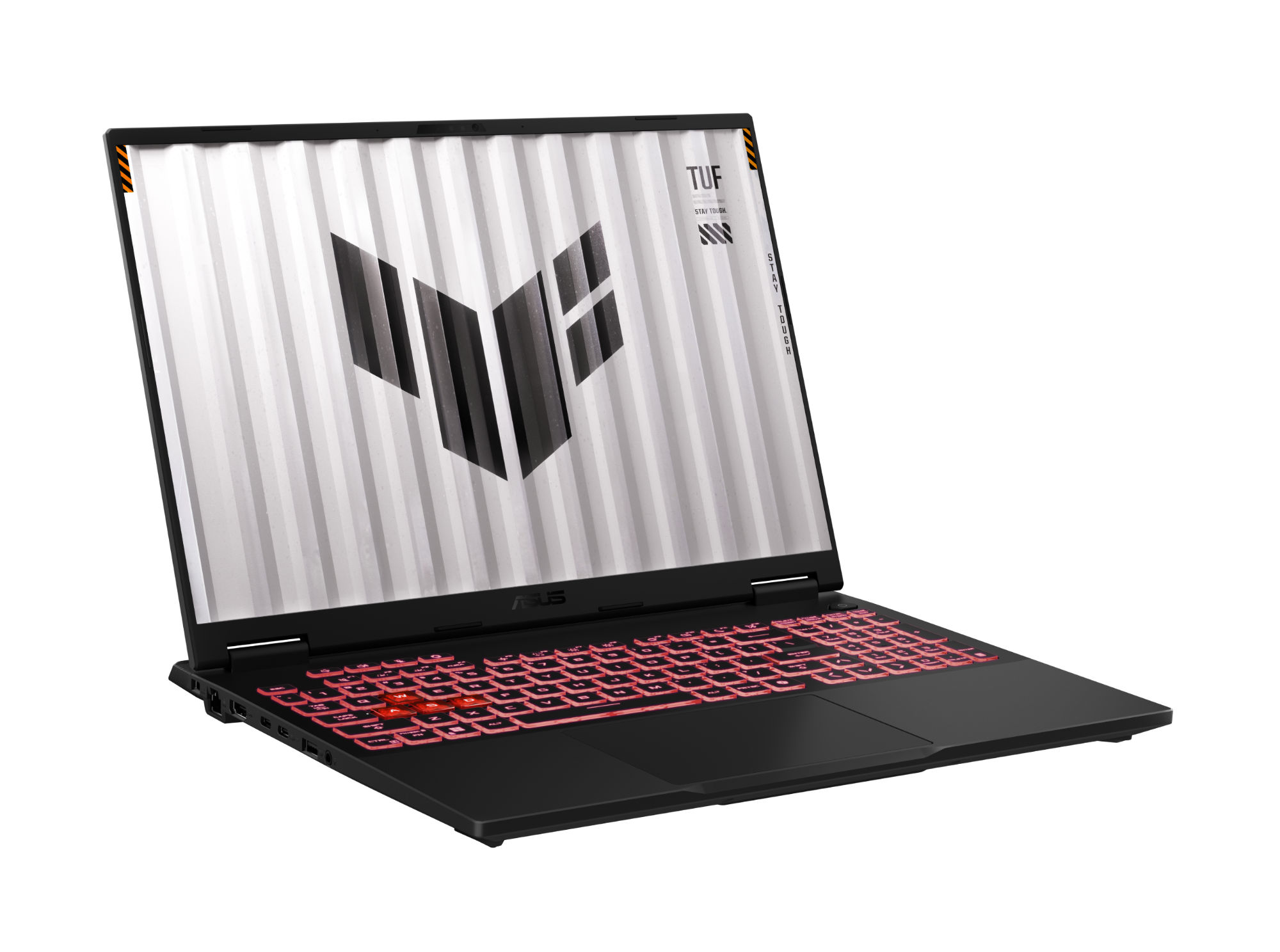
- Écran 16.0" LCD - IPS (anti-reflets) 165 Hz
- Résolution Full HD 1920 x 1200 pixels (16/10)
- Sans système
- AMD Ryzen 7 260 (8 coeurs x 5.10 GHz)
- Nvidia RTX 5050 (mobile) (8 Go)
- 16 Go DDR5 - 5600 MHz
- 512 Go (SSD M.2 PCI-e 4.0)
- Voir les caractéristiques complètes
Prix de référence (juillet 2025) : 1 799,00€
Dans la même gamme
-

Asus TUF Gaming A16 (2024) TUF617NS-RN3003
- Écran 16.0" LCD - IPS (anti-reflets) 165 Hz
- Résolution Full HD 1920 x 1200 pixels (16/10)
- Sans système
- AMD Ryzen 7 7435HS (8 coeurs x 4.50 GHz)
- AMD Radeon RX 7600S (8 Go)
- 16 Go DDR5 - 4800 MHz
- 512 Go (SSD M.2 PCI-e 4.0)
-

Asus TUF Gaming A16 (2024) FA608WI-QT012W
- Écran 16.0" LCD - IPS (anti-reflets) 165 Hz
- Résolution QHD 2560 x 1600 pixels (16/10)
- Windows 11 Famille
- AMD Ryzen AI 9 HX 370 (12 coeurs x 5.10 GHz)
- Nvidia GeForce RTX 4070 (Mobile) (8 Go)
Version : 2225 MHz / 140 W - 32 Go LPDDR5X - 7500 MHz
- 1 To (SSD M.2 PCI-e 4.0)
-

Asus TUF Gaming A16 (2024) TUF607NU-RL109 (Ryzen 5 / RTX 4050 / 16 Go / 512 Go / Sans OS)
- Écran 16.0" LCD - IPS (anti-reflets) 144 Hz
- Résolution Full HD 1920 x 1200 pixels (16/10)
- Sans système
- AMD Ryzen 5 7535HS (6 coeurs x 4.55 GHz)
- Nvidia GeForce RTX 4050 (Mobile) (6 Go)
Version : 1681 MHz / 140 W - 16 Go DDR5 - 4800 MHz
- 512 Go (SSD M.2 PCI-e 3.0)
-

Asus TUF Gaming A16 (2024) TUF608PP-DRFQT049W (Ryzen 9 / RTX 5070 / 16 Go / 1 To)
- Écran 16.0" LCD - IPS (anti-reflets) 165 Hz
- Résolution QHD 2560 x 1600 pixels (16/10)
- Windows 11 Famille
- AMD Ryzen AI 9 HX 370 (12 coeurs x 5.10 GHz)
- Nvidia GeForce RTX 5070 (mobile) (8 Go)
- 16 Go LPDDR5X - 7500 MHz
- 1 To (SSD M.2 PCI-e 4.0)
-

Asus TUF Gaming A16 (2024) TUF608PP-DRQT041W (Ryzen 9 / RTX 5070 / 16 Go / 1 To)
- Écran 16.0" LCD - IPS (anti-reflets) 165 Hz
- Résolution QHD 2560 x 1600 pixels (16/10)
- Windows 11 Famille
- AMD Ryzen AI 9 HX 370 (12 coeurs x 5.10 GHz)
- Nvidia GeForce RTX 5070 (mobile) (8 Go)
- 16 Go LPDDR5X - 7500 MHz
- 1 To (SSD M.2 PCI-e 4.0)
-

Asus TUF Gaming A16 (2024) TUF608JMR-DRFV054W (Core i7 / RTX 5060 / 16 Go / 1 To)
- Écran 16.0" LCD - IPS (anti-reflets) 165 Hz
- Résolution Full HD 1920 x 1200 pixels (16/10)
- Windows 11 Famille
- Intel Core i7-14650HX (16 coeurs x 5.20 GHz)
- Nvidia RTX 5060 (mobile) (8 Go)
Version : 2547 MHz / 115 W - 16 Go DDR5 - 5600 MHz
- 1 To (SSD M.2 PCI-e 4.0)
-

Asus TUF Gaming TUF607VU-RL021W
- Écran 16.0" LCD - IPS (anti-reflets) 144 Hz
- Résolution Full HD 1920 x 1200 pixels (16/10)
- Windows 11 Famille
- Intel Core 5 210H (8 coeurs x 4.80 GHz)
- Nvidia GeForce RTX 4050 (Mobile) (6 Go)
- 16 Go DDR5 - 5600 MHz
- 1 To (SSD M.2 PCI-e 4.0)
-

Asus TUF Gaming A16 (2024) TUF608UM-DRQT050W (Ryzen 7 / RTX 5060 / 16 Go / 512 Go)
- Écran 16.0" LCD - IPS (anti-reflets) 165 Hz
- Résolution QHD 2560 x 1600 pixels (16/10)
- Sans système
- AMD Ryzen 7 260 (8 coeurs x 5.10 GHz)
- Nvidia RTX 5060 (mobile) (8 Go)
Version : 2547 MHz / 115 W - 16 Go DDR5 - 5600 MHz
- 512 Go (SSD M.2 PCI-e 4.0)
-

Asus TUF Gaming A16 (2024) TUF608UM-DRFQT060W (Ryzen 7 / RTX 5060 / 16 Go / 512 Go)
- Écran 16.0" LCD - IPS (anti-reflets) 165 Hz
- Résolution QHD 2560 x 1600 pixels (16/10)
- Sans système
- AMD Ryzen 7 260 (8 coeurs x 5.10 GHz)
- Nvidia RTX 5060 (mobile) (8 Go)
Version : 2547 MHz / 115 W - 16 Go DDR5 - 5600 MHz
- 512 Go (SSD M.2 PCI-e 4.0)
-

Asus TUF Gaming A16 (2024) TUF608JMR-RV056W (Core i7 / RTX 5060 / 16 Go / 1 To)
- Écran 16.0" LCD - IPS (anti-reflets) 165 Hz
- Résolution Full HD 1920 x 1200 pixels (16/10)
- Windows 11 Famille
- Intel Core i7-14650HX (16 coeurs x 5.20 GHz)
- Nvidia RTX 5060 (mobile) (8 Go)
Version : 2547 MHz / 115 W - 16 Go DDR5 - 5600 MHz
- 1 To (SSD M.2 PCI-e 4.0)
-

Asus TUF Gaming A16 (2024) A16 608UH-RV053W (Ryzen 7 / RTX 5060 / 16 Go / 512 Go)
- Écran 16.0" LCD - IPS (anti-reflets) 165 Hz
- Résolution Full HD 1920 x 1200 pixels (16/10)
- Windows 11 Famille
- AMD Ryzen 7 260 (8 coeurs x 5.10 GHz)
- Nvidia RTX 5060 (mobile) (8 Go)
Version : 2547 MHz / 115 W - 16 Go DDR5 - 5600 MHz
- 512 Go (SSD M.2 PCI-e 4.0)
-

Asus TUF Gaming A16 (2024) TUF608JMR-RV095W (Core i7 / RTX 5060 / 32 Go / 512 Go)
- Écran 16.0" LCD - IPS (anti-reflets) 165 Hz
- Résolution Full HD 1920 x 1200 pixels (16/10)
- Windows 11 Famille
- Intel Core i7-14650HX (16 coeurs x 5.20 GHz)
- Nvidia RTX 5060 (mobile) (8 Go)
Version : 2547 MHz / 115 W - 32 Go DDR5 - 5600 MHz
- 512 Go (SSD M.2 PCI-e 4.0)
-

Asus TUF Gaming A16 (2024) TUF608PP-RV067W (Ryzen 9 / RTX 5070 / 32 Go / 1 To)
- Écran 16.0" LCD - IPS (anti-reflets) 165 Hz
- Résolution Full HD 1920 x 1200 pixels (16/10)
- Windows 11 Famille
- AMD Ryzen AI 9 HX 370 (12 coeurs x 5.10 GHz)
- Nvidia GeForce RTX 5070 (mobile) (8 Go)
- 32 Go LPDDR5X - 7500 MHz
- 1 To (SSD M.2 PCI-e 4.0)
-

Asus TUF Gaming A16 TUF608JH-RV073W
- Écran 16.0" LCD - IPS (anti-reflets) 165 Hz
- Résolution Full HD 1920 x 1080 pixels (16/9)
- Windows 11 Famille
- Intel Core i5-13450HX (10 coeurs x 4.50 GHz)
- Nvidia RTX 5050 (mobile) (8 Go)
- 16 Go DDR5 - 4800 MHz
- 512 Go (SSD M.2 PCI-e 4.0)
-

Asus TUF Gaming A16 (2024) TUF608UM-RV080W (Ryzen 7 / RTX 5060 / 16 Go / 512 Go)
- Écran 16.0" LCD - IPS (anti-reflets) 60 Hz
- Résolution Full HD 1920 x 1200 pixels (16/10)
- Windows 11 Famille
- AMD Ryzen 7 260 (8 coeurs x 5.10 GHz)
- Nvidia RTX 5060 (mobile) (8 Go)
- 16 Go DDR5 - 5600 MHz
- 512 Go (SSD M.2 PCI-e 4.0)
Suggestions
-

LG 32GX850A-B
- Écran gaming 32.0" OLED
- Résolution 4K UHD 3840 x 2160 pixels (16/9)
- 165 Hz
- 250 cd/m²
- Ajustable en hauteur. Inclinable. Rotatif horizontalement. Pivotant verticalement.
- AMD FreeSync Premium Pro, HDR10, Nvidia G-Sync, TÜV Rheinland Flicker Free, TÜV Rheinland Low Blue Light
-

Samsung Odyssey OLED G8 G81SF LS32FG810SUXEN
- Écran gaming 32.0" OLED
- Résolution 4K UHD 3840 x 2160 pixels (16/9)
- 240 Hz
- 260 cd/m²
- Ajustable en hauteur. Inclinable. Rotatif horizontalement. Pivotant verticalement.
- AMD FreeSync Premium Pro, HDR10+ Gaming, Nvidia G-Sync, TÜV Rheinland Flicker Free, VESA DisplayHDR 400 True Black
-

Samsung Odyssey G8 G81SF LS27FG810SUXEN
- Écran gaming 27.0" OLED
- Résolution 4K UHD 3840 x 2160 pixels (16/9)
- 240 Hz
- 250 cd/m²
- Ajustable en hauteur. Inclinable. Rotatif horizontalement. Pivotant verticalement.
- AMD FreeSync Premium Pro, HDR10+ Gaming, Nvidia G-Sync, TÜV Rheinland Flicker Free, VESA DisplayHDR 400 True Black
-

Lenovo Legion Pro 32UD-10 (69D0GACBEU)
- Écran gaming 31.5" OLED
- Résolution 4K UHD 3840 x 2160 pixels (16/9)
- 240 Hz
- 250 cd/m²
- Incurvé 800 R
- Ajustable en hauteur. Inclinable. Rotatif horizontalement.
- AMD FreeSync Premium Pro, Eyesafe Certified, HDR10, TÜV Rheinland Eye comfort, TÜV Rheinland Flicker Free
-

Asus ROG Strix OLED XG32UCWMG
- Écran gaming 31.5" OLED
- Résolution 4K UHD 3840 x 2160 pixels (16/9)
- 240 Hz
- 1300 cd/m²
- Ajustable en hauteur. Inclinable. Rotatif horizontalement.
- AMD FreeSync Premium Pro, HDR10, Nvidia G-Sync, TÜV Rheinland Flicker Free, TÜV Rheinland Low Blue Light
-

Asus ROG Swift OLED PG32UCDMR
- Écran gaming 31.5" OLED
- Résolution 4K UHD 3840 x 2160 pixels (16/9)
- 240 Hz
- 10000 cd/m²
- Ajustable en hauteur. Inclinable. Rotatif horizontalement.
- AMD FreeSync Premium Pro, HDR10, Nvidia G-Sync, TÜV Rheinland Flicker Free, VESA Adaptive-Sync
-

Samsung Odyssey G7 G75F LS40FG756EUXEN
- Écran gaming 40.0" VA
- Résolution 5K 5120 x 2160 pixels (21/9)
- 180 Hz
- 350 cd/m²
- Incurvé 1000 R
- Ajustable en hauteur. Inclinable. Rotatif horizontalement.
- AMD FreeSync Premium Pro, TÜV Rheinland Flicker Free, VESA DisplayHDR 600
-

Samsung Odyssey G60SF QHD 500Hz
- Écran gaming 27.0" OLED
- Résolution QHD 2560 x 1440 pixels (16/9)
- 500 Hz
- 300 cd/m²
- Ajustable en hauteur. Inclinable. Rotatif horizontalement. Pivotant verticalement.
- AMD FreeSync Premium Pro, Nvidia G-Sync, TÜV Rheinland Flicker Free, VESA DisplayHDR 500 True Black
-

MSI MAG 272QP QD-OLED
- Écran gaming 26.5" OLED
- Résolution QHD 2560 x 1440 pixels (16/9)
- 500 Hz
- 500 cd/m²
- Ajustable en hauteur. Inclinable. Rotatif horizontalement. Pivotant verticalement.
- AMD FreeSync Premium Pro, VESA DisplayHDR 400 True Black
-

LG 49U950A-W
- Écran gaming 49.0" Nano IPS
- Résolution 5K 5120 x 2160 pixels (21/9)
- 144 Hz
- 400 cd/m²
- Ajustable en hauteur. Inclinable. Rotatif horizontalement.
- AMD FreeSync Premium Pro, HDR10, Nvidia G-Sync, TÜV Rheinland Flicker Free, TÜV Rheinland Low Blue Light
Note
Cette note est calculée en fonction des performances du PC et de son prix de vente.
3.8 / 10Performances
Asus TUF Gaming A16 (2024) 90NR0KS1-M00530 : un 16" gamer endurant, pensé pour jouer… et pour durer
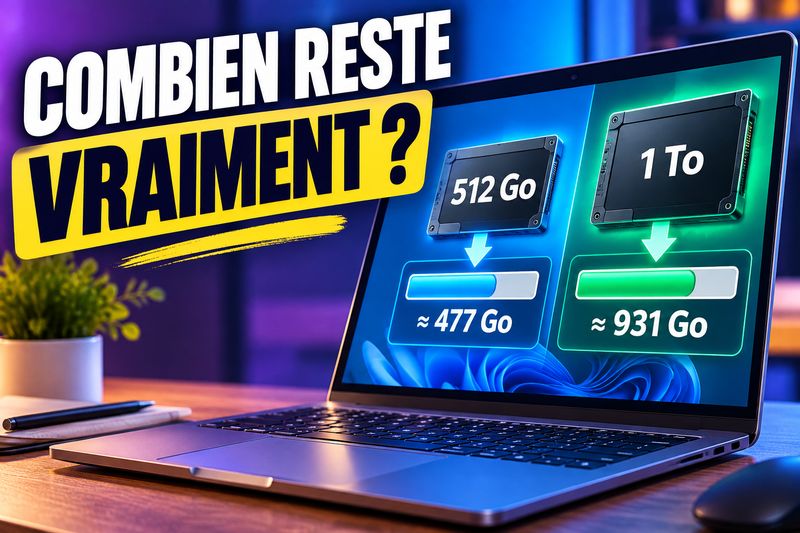
▸ Pour qui ? Les joueurs qui veulent un PC portable gamer 16" polyvalent (jeux, streaming léger, création) et qui acceptent un modèle sans OS à installer.
▸ Points forts : écran IPS 165 Hz anti-reflets, couleurs couvrant le sRGB, duo Ryzen 7 (8 cœurs) + RTX 5050, grosse batterie 90 Wh, Wi-Fi 6E, USB-C/USB4 + HDMI 2.1, excellent indice de réparabilité 9,60/10.
▸ Limites / points faibles : livré sans système d’exploitation, châssis plastique et 2,2 kg (ça se sent dans le sac), 512 Go qui peuvent se remplir vite avec les gros jeux, luminosité 300 cd/m² plutôt “intérieur”.
▸ Pourquoi ce prix (prix de lancement) ? Prix de lancement : 1 799 € : positionnement gaming “sérieux” (GPU dédié récent, écran rapide, grosse batterie, connectique riche) tout en laissant l’utilisateur choisir sa licence Windows (ou Linux), ce qui peut compter dans le budget global.
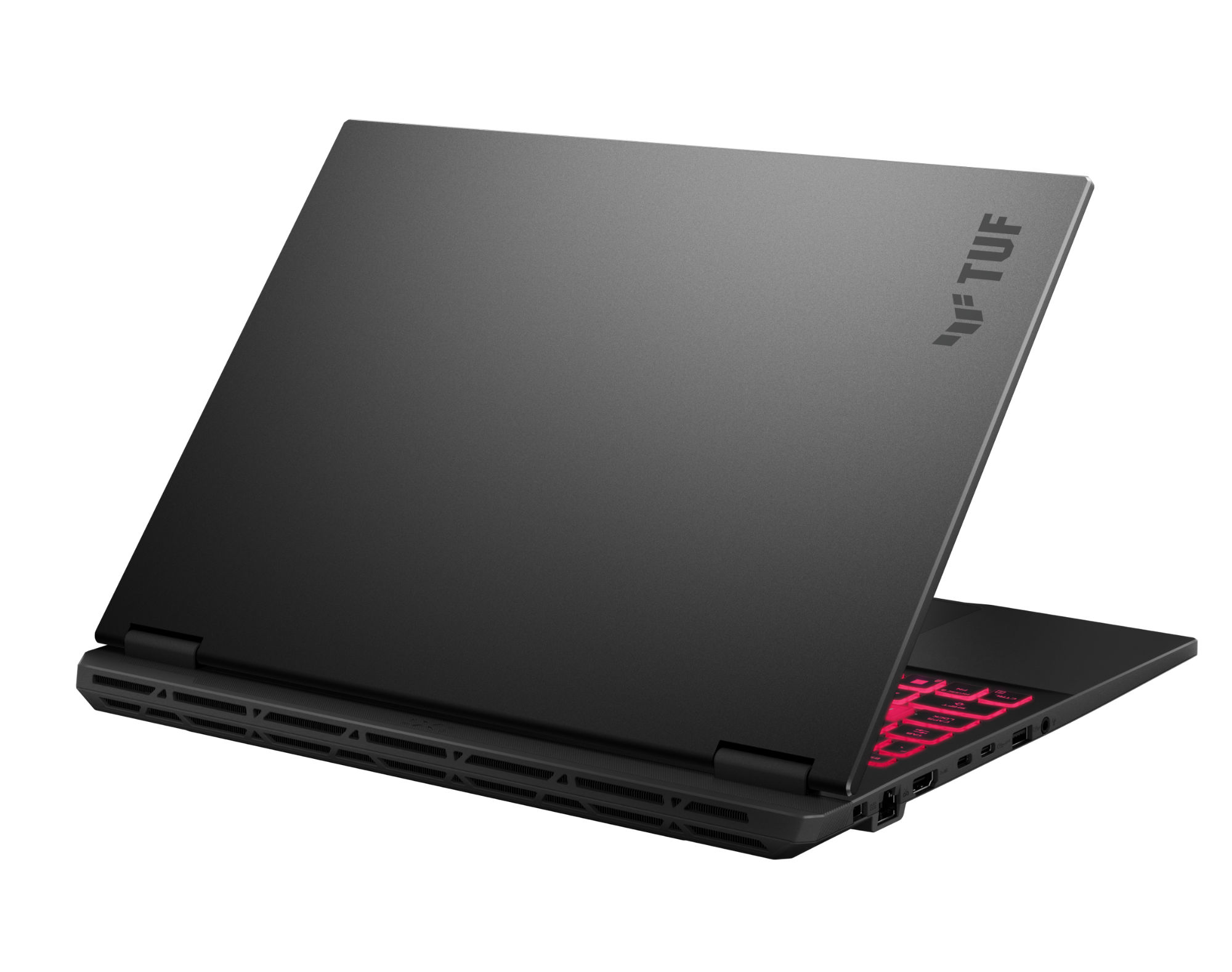
Petit repère visuel : le TUF A16 vise le pragmatisme (gros châssis de 16", connectique complète) plus que la finesse extrême.

Ce TUF Gaming A16 90NR0KS1-M00530 est-il un bon choix “unique” pour jouer et travailler ?
Oui, à condition d’assumer sa philosophie : c’est un PC portable gamer qui peut aussi servir au quotidien. La configuration (Ryzen 7 8 cœurs + RTX 5050) est à l’aise en bureautique, navigation, multitâche, et peut encaisser du montage/retouche “raisonnable” sans être une station de travail. En revanche, si votre priorité est la mobilité silencieuse (cours toute la journée, bibliothèque, train), son format 16" et son poids font qu’il est plus “transportable” que “ultra-nomade”. Pour comparer avec d’autres profils, un tour dans la sélection de PC portables gamer aide à cadrer le niveau de machine.
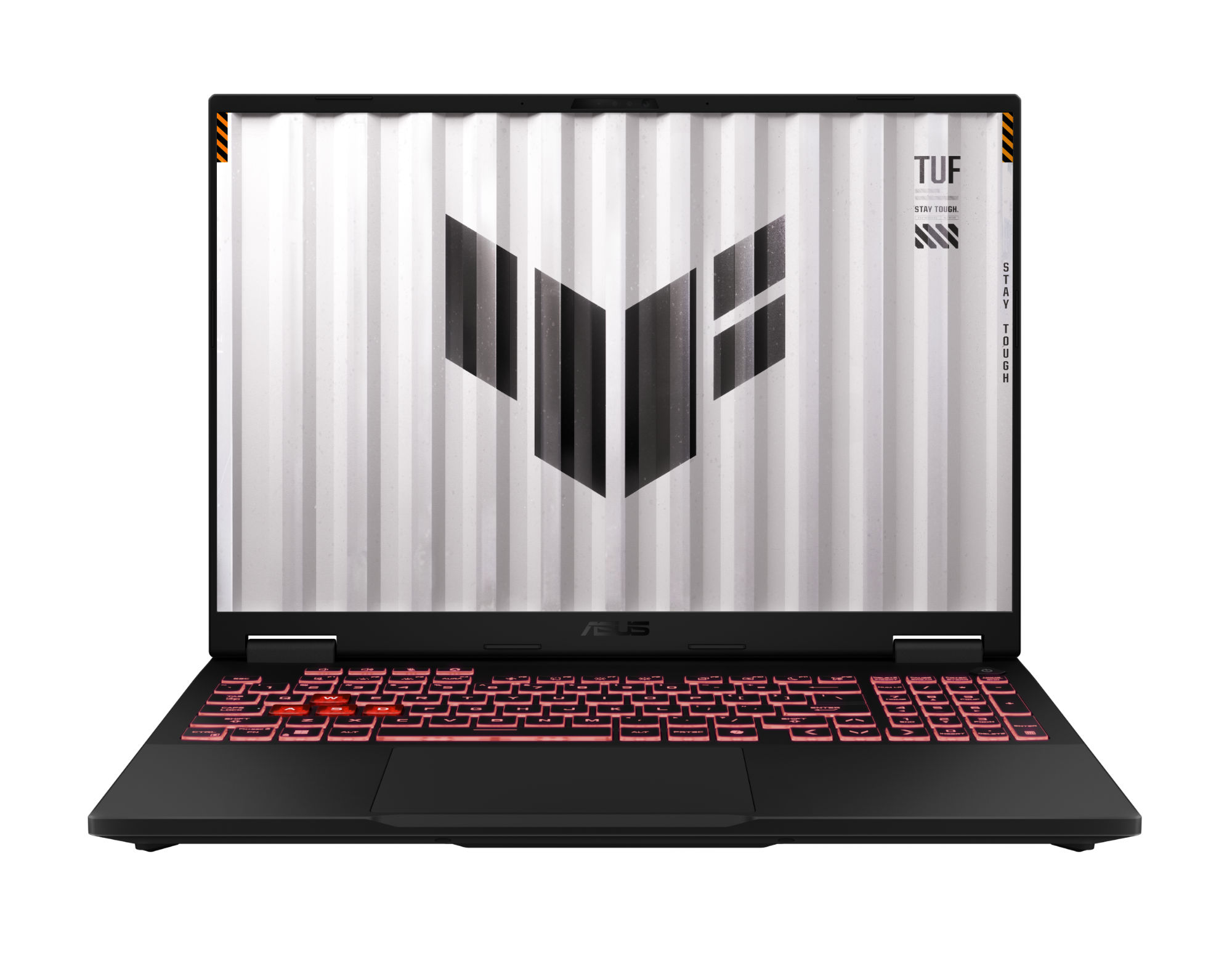
Vue châssis : on est sur un 16" conçu pour encaisser des sessions de jeu, pas sur un ultraportable.

L’écran IPS 165 Hz de 16" est-il plus intéressant qu’il n’y paraît sur le papier ?
Plutôt oui : en jeu, le 165 Hz améliore la sensation de fluidité (surtout sur les jeux compétitifs). En dehors du gaming, la définition 1920 x 1200 offre un affichage un peu plus “haut” qu’un 1080p classique, ce qui est agréable pour le web, le code, les documents ou la timeline en montage. La dalle IPS et l’anti-reflets vont dans le bon sens pour le confort. La limite, c’est la luminosité annoncée à 300 cd/m² : très correct en intérieur, plus délicat en extérieur plein soleil.
Vue écran : le combo IPS + anti-reflets est pensé pour jouer sans reflets envahissants en intérieur.

Avec 90 Wh et 2,2 kg, est-ce un “vrai” PC portable pour bouger ?
La batterie 90 Wh est un bon signal : sur ce type de machine, elle sert surtout à rendre l’usage nomade “possible” (cours, réunions, déplacements) sans être constamment à la prise en usage léger. Mais un 16" gamer reste une machine qui aime le secteur dès que vous sollicitez la RTX (jeu, 3D, rendu). En clair : très bien pour alterner bureau/maison et quelques trajets, moins idéal si vous cherchez un compagnon ultra-léger toute la journée.
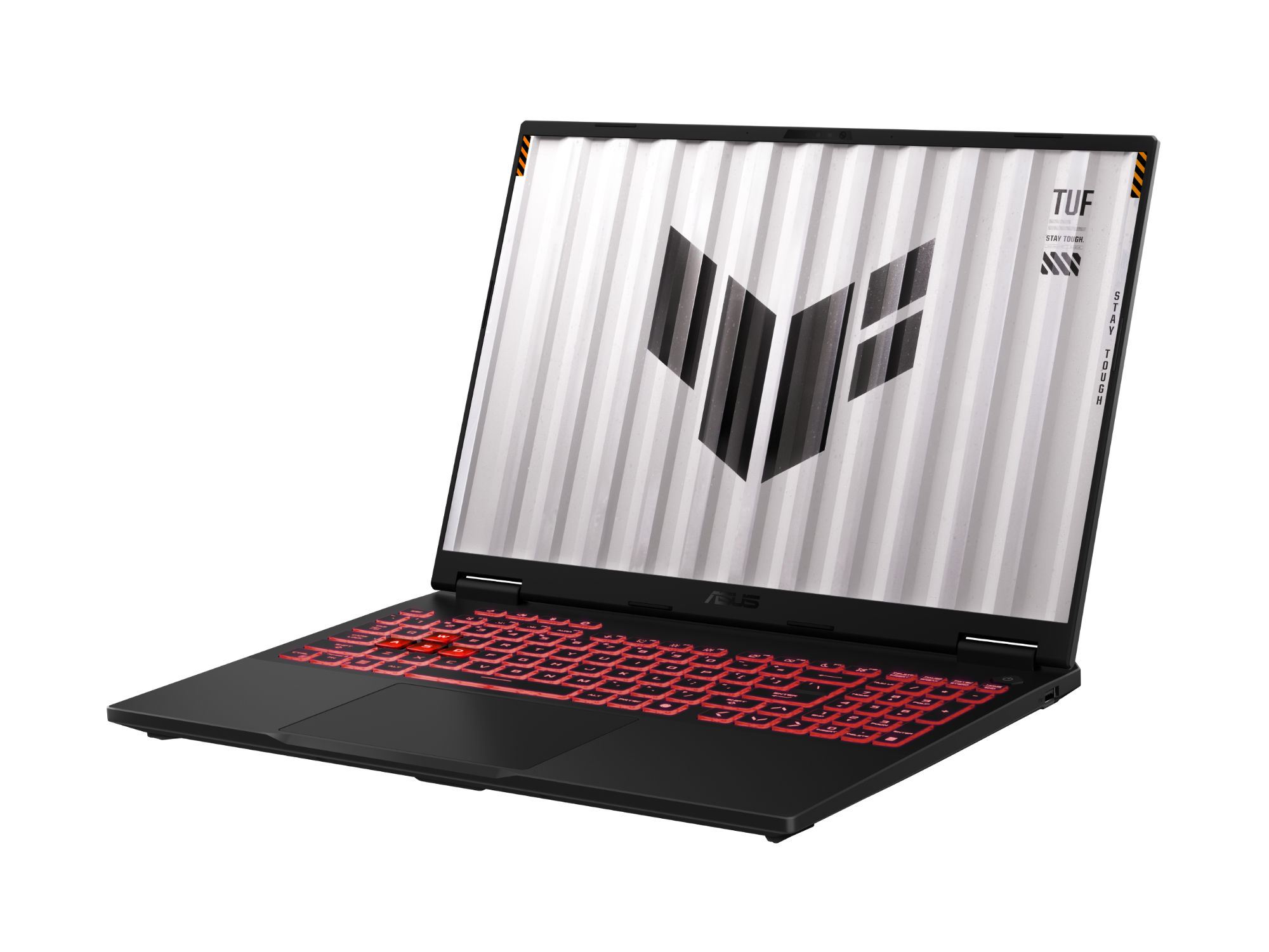
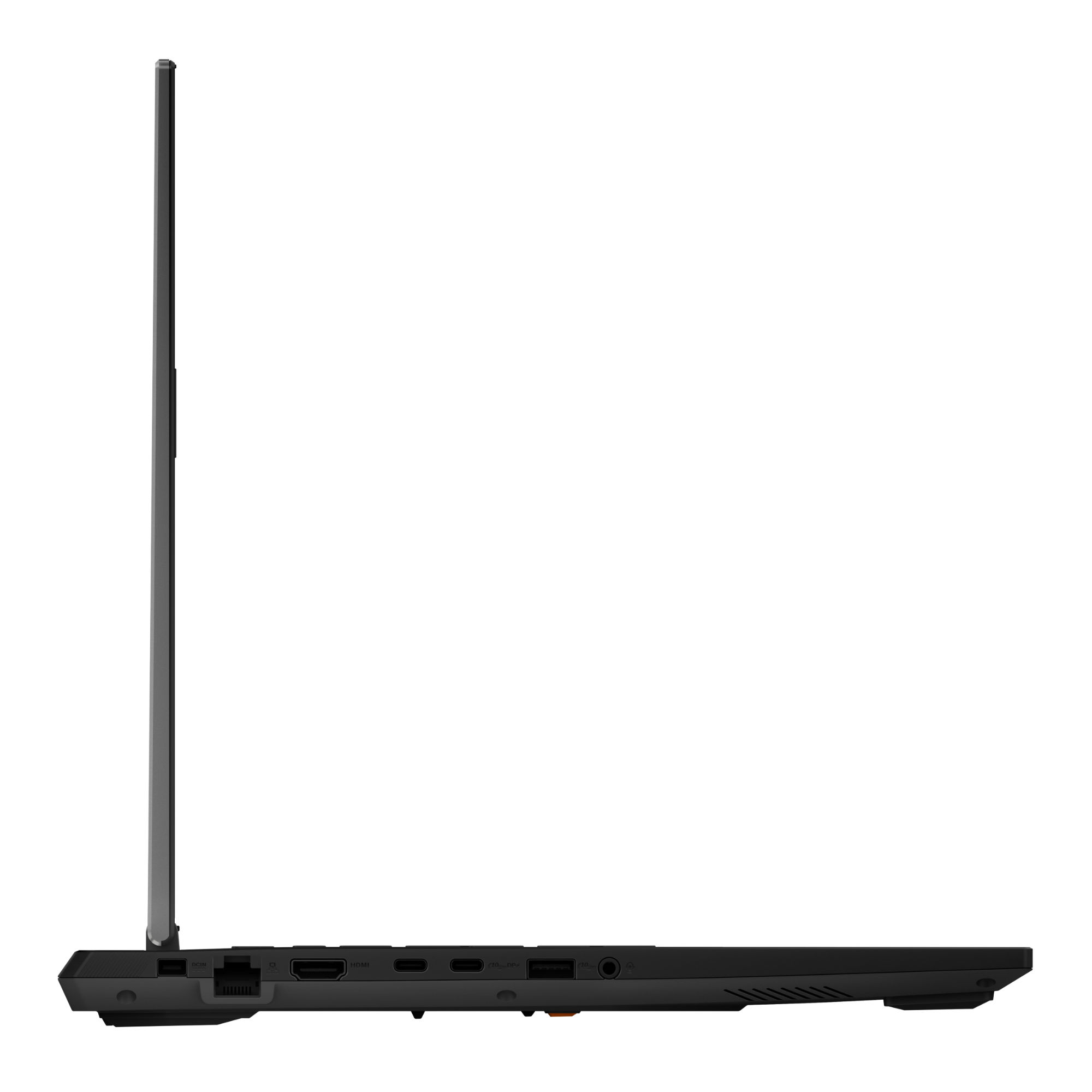
Vue profil : l’épaisseur et le gabarit rappellent que la priorité est la performance et le refroidissement.

Concrètement, à quoi s’attendre avec une RTX 5050 (mobile) et un Ryzen 7 (Zen 5) ?
Sans promettre des chiffres magiques, ce duo vise une expérience solide en 1920 x 1200 : les jeux compétitifs (où la fluidité compte) profitent bien de l’écran rapide, et les jeux plus lourds se jouent généralement en ajustant les réglages selon vos exigences (qualité visuelle vs silence/ température). Côté “hors-jeu”, les 8 cœurs du Ryzen 7 sont utiles pour le multitâche, la compression, la création, ou un peu de streaming, tant que vous restez dans des scénarios raisonnables pour un portable.
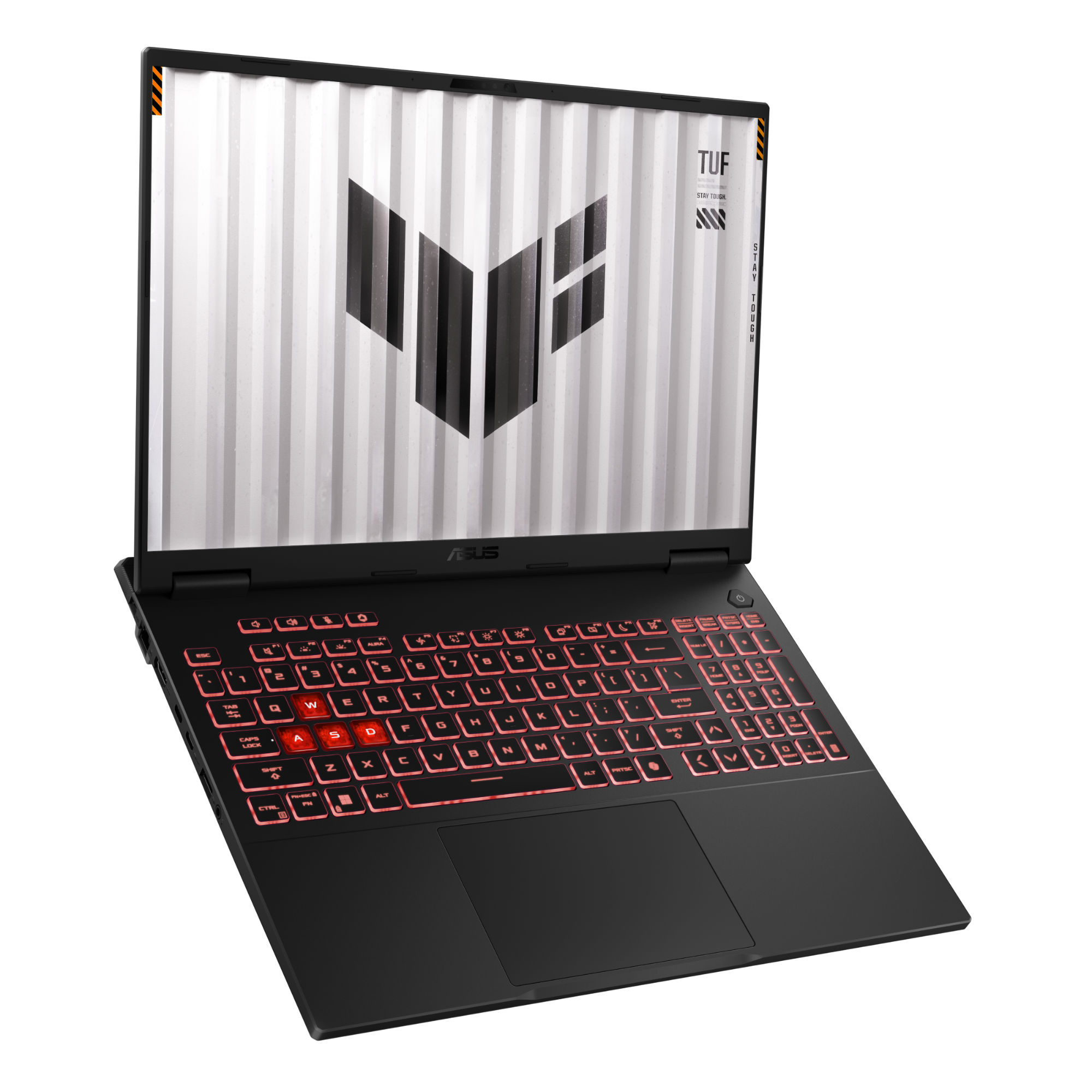
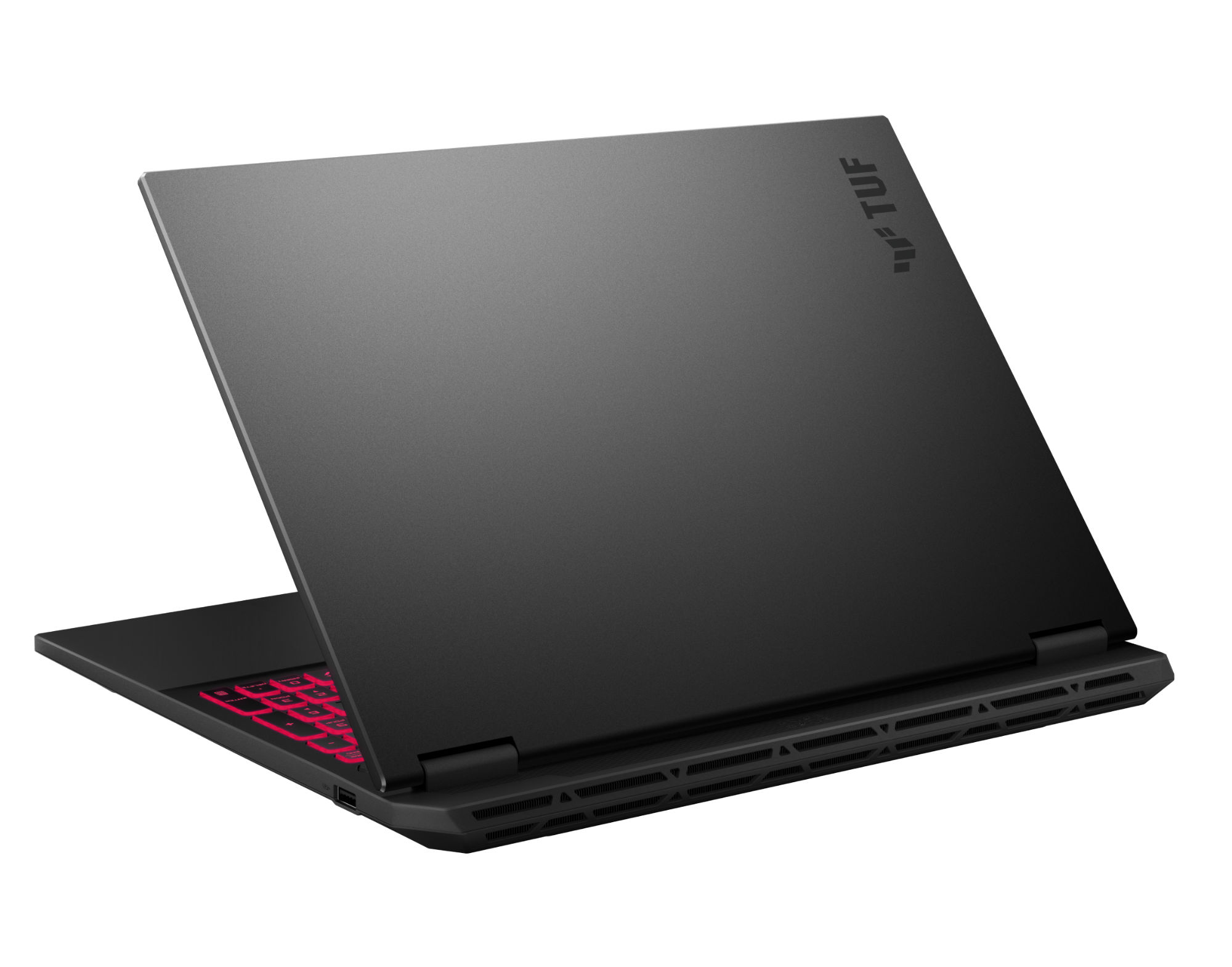
Vue clavier : le TUF A16 mise sur un usage gaming, avec un clavier pensé pour les sessions longues.

Livré sans OS : bon plan malin ou contrainte pénible ?
C’est l’un des points qui “trie” les acheteurs. Sans OS, vous gardez la main : installer Windows (licence à prévoir) ou partir sur Linux. Si vous êtes à l’aise avec une installation, c’est souvent un bon levier pour optimiser le budget. Si vous voulez un PC prêt à l’emploi dès l’ouverture du carton, ou si l’idée d’installer/paramétrer vous fatigue d’avance, visez plutôt une configuration vendue avec Windows (souvent plus simple pour un usage familial).
Vue connectique : USB-C + HDMI + RJ45 : pratique si vous jouez sur écran externe ou en Ethernet.

Évolutivité et réparabilité : est-ce un modèle “durable” dans le temps ?
Plutôt, et c’est un gros point fort : l’indice de réparabilité 9,60/10 est excellent. Côté mémoire, on sait qu’il y a 2 / 2 slots et une capacité max de 64 Go : concrètement, les emplacements sont occupés, mais une montée en RAM reste envisageable en remplaçant les barrettes existantes (si votre usage le justifie : VM, création lourde, gros multitâche). Pour le stockage, la fiche indique un SSD NVMe 512 Go ; en revanche, l’ajout d’un second SSD n’est pas explicitement garanti ici : si vous visez une grosse bibliothèque de jeux, prévoyez éventuellement un SSD externe… ou vérifiez la possibilité d’upgrade avant achat.
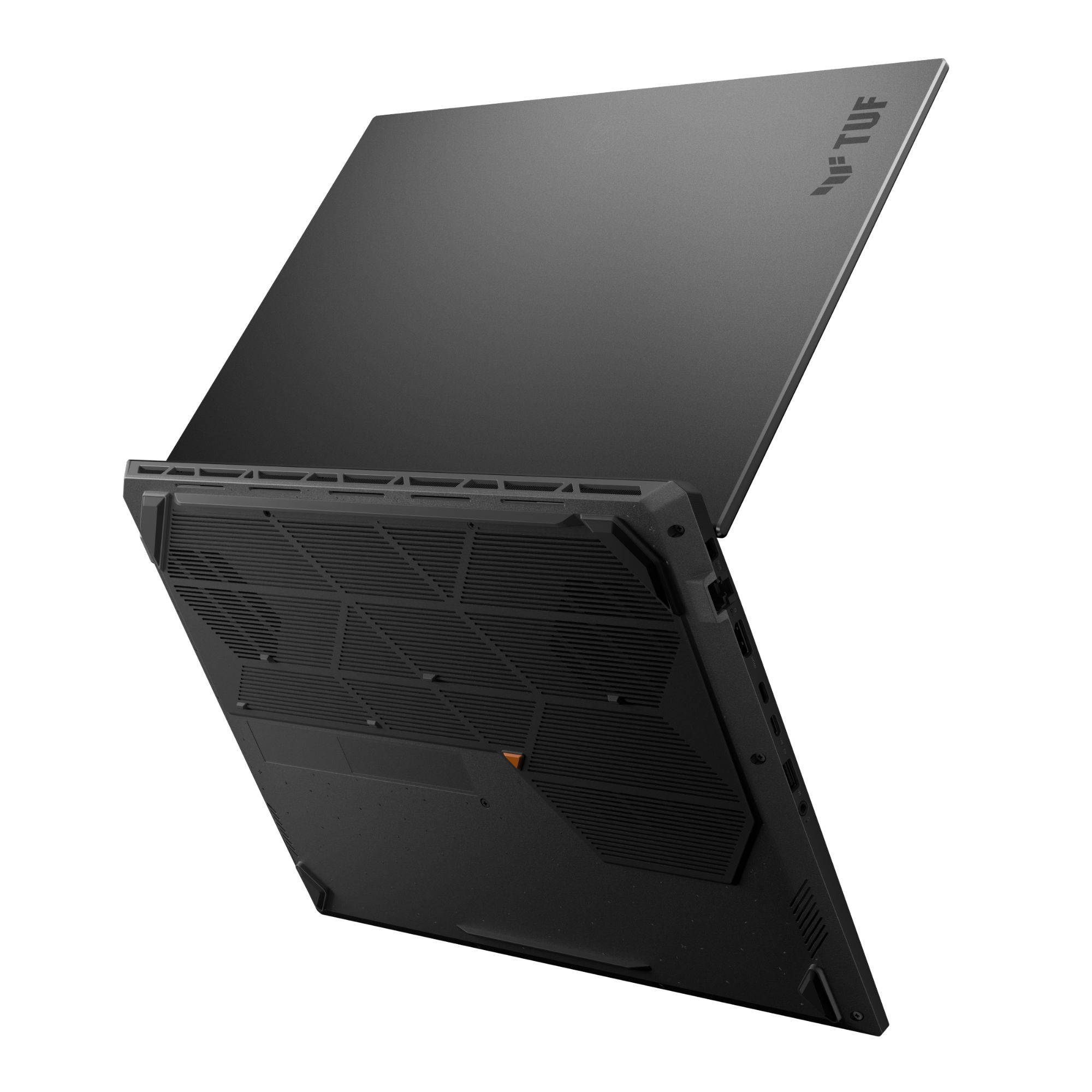
Vue châssis (bis) : la certification MIL-STD-810H évoque des tests de résistance, sans faire de ce PC un tank indestructible.

Au quotidien, qu’est-ce qui peut vraiment faire la différence (ou agacer) ?
Les détails pratiques sont bien vus : Wi-Fi 6E et Bluetooth 5.3 pour un réseau moderne, webcam FHD 1080p avec infrarouge (pratique pour la reconnaissance faciale… si vous installez un OS compatible), pavé numérique et rétroéclairage pour le confort. La connectique est généreuse (dont USB-C 4.0 et HDMI 2.1), et la présence d’un RJ45 est appréciable pour jouer en Ethernet. À l’inverse, l’absence de lecteur de carte peut gêner certains créatifs, et le format 16" + 2,2 kg n’est pas le meilleur ami des déplacements “minimalistes”. Pour explorer d’autres machines Asus (plus fines, ou plus premium), vous pouvez parcourir les PC portables Asus ou le top des PC portables gaming.
Dernier visuel : un 16" pensé pour le jeu, qui assume sa vocation “setup” (écran externe, périphériques, etc.).

Dans la même gamme, à considérer aussi :
- Une variante plus accessible en Ryzen 5 / RTX 4050 (TUF607NU-RL109)
- Une alternative AMD (Ryzen 7 / Radeon RX 7600S) : TUF617NS-RN3003
- Une version bien plus musclée (FA608WI-QT012W), pour ceux qui veulent monter en gamme
Avis clients : les retours disponibles sont globalement très positifs (note moyenne 4,8/5 sur 26 avis). Les acheteurs mettent surtout en avant le rapport performances/prix, la sensation de fluidité liée à l’écran 165 Hz et la puissance perçue en jeu. Plusieurs retours évoquent aussi une autonomie jugée correcte pour un portable gaming et une charge perçue comme rapide. À garder en tête : une partie des avis visibles sont indiqués comme “sponsorisés” et parfois rattachés à un produit équivalent/similaire, donc l’idéal est de croiser avec votre usage (silence, transport, stockage) avant de trancher.
Positionnement prix actuel :
en dessous de 1 100 € : bonne affaire pour un 16" gamer avec RTX 5050 + écran 165 Hz, surtout si le fait d’être sans OS ne vous gêne pas (ou si vous avez déjà une licence).
entre 1 100 et 1 400 € : prix correct si vous valorisez l’écran rapide, la batterie 90 Wh et la connectique (USB-C/USB4, HDMI 2.1, RJ45) et que vous comptez garder la machine plusieurs années.
au-dessus de 1 400 € : à envisager surtout si vous tenez à ce châssis/cette gamme précise, ou si les alternatives du marché proposent à prix proche un GPU/écran/stockage plus ambitieux (sinon, comparez avec d’autres PC portables gaming du même budget).
Conçu pour un usage gaming, ce PC portable de chez Asus s'adresse aux gamers en recherche de performances. Sa carte graphique (Nvidia RTX 5050 (mobile)) permet de profiter de nombreux jeux vidéo dans des conditions optimales.
Le PC Asus TUF Gaming A16 (2024) 90NR0KS1-M00530 (Ryzen 7 / RTX 5050 / 16 Go / 512 Go) possède une taille d'écran de 16.0 pouces équivalent à une diagonale de 40,64 cm.
Asus utilise sur cette référence une dalle LCD - IPS avec un taux de rafraîchissement de 165 Hz. La luminosité maximale est annoncée à 300 cd/m². L'écran propose des angles de vision de 178°. Il supporte le profil colorimétrique sRGB à 100%.
Ce PC portable propose une résolution maximale de 1920 x 1200 pixels. Son ratio d'aspect est de 16/10 - il s'agit de la relation entre la largeur et la hauteur de l'image. Le PPI - ou pixels par pouce - représente quant à lui la densité de pixel sur un pouce, il se détermine avec la diagonale de l'écran et sa résolution. Sur ce PC la valeur est de 142ppp. Cet indicateur permet de déterminer la finesse d'affichage d'un écran, une valeur élevée permettra d'obtenir des textes plus fins.
Cet écran possède un revêtement antireflet / mat. Celui-ci permet d'atténuer le réfléchissement de la lumière pour un meilleur confort de lecture. C'est une fonctionnalité particulièrement appréciée si vous utilisez votre PC dans un environnement lumineux, dos à une fenêtre ou à l'extérieur, par exemple. Contrairement à un écran brillant où les couleurs sont souvent très vives avec des noirs plus profonds et des blancs plus lumineux, sur un écran mat les couleurs peuvent paraître moins intenses.
Ce PC portable ne propose pas d'écran tactile. Pour intéragir, seul l'usage du clavier et du touchpad (souris) est possible.
L'écran n'étant pas tactile, aucun stylet (actif ou passif) n'est compatible avec cet ordinateur.
Ce PC portable dispose d'une connectivité Wi-Fi 6E pour se connecter à votre Box Internet ou à votre routeur. Il propose également du Bluetooth 5.3 pour connecter une souris, un casque audio ou des écouteurs sans-fil.
Le clavier de l'ordinateur est adapté pour la France avec une configuration AZERTY. Les photos d'illustration proposées par Asus ne sont pas contractuelles au niveau de la configuration du clavier.
L'ordinateur propose un clavier à touches rétroéclairées, il s'agit d'une fonctionnalité particulièrement utile pour mettre en évidence les touches dans des environnements peu lumineux.
Ce PC portable dispose d'un pavé numérique sur la partie droite de son clavier. Comme sur une calculatrice, il permet d'accéder à la saisie des chiffres ou à des opérations mathématiques avec facilité pour gagner en productivité.
Cet ordinateur portable ne dispose pas de lecteur d'empreintes digitales. La webcam propose cependant la reconnaissance faciale par capteur infrarouge qui offre les mêmes fonctionnalités que la reconnaissance d'empreintes. Ce dispositif permet de s'authentifier avec rapidité sans avoir à saisir son mot de passe.
Le PC fixe de chez Asus propose 2 ports USB-C. Cependant, aucun des ports USB-C n'est compatible avec la technologie Thunderbolt proposée par Intel.
L'ordinateur est équipé d'un processeur AMD Ryzen 7 260 composé de 8 coeurs cadencés jusqu'à 5.10 GHz. Ce processeur est conçu avec une finesse de gravure en seulement 4 nm. Il propose une enveloppe thermique (TDP) de 45 W. AMD embarque sur cette puce une mémoire cache de 16 Mo. Cette référence fait partie de la gamme Zen 5 de chez AMD commercialisée depuis juillet 2024.
Ce PC portable dispose de 16 Go de mémoire vive (RAM). Elle est cadencée à une fréquence de fonctionnement de 5600 MHz et utilise la technologie DDR5. Pour une utilisation bureautique, Comparez-malin recommande une quantité de mémoire d'au minimum de 8 Go pour garantir le bon fonctionnement de l'appareil en multitâche. Pour un usage gaming, un minimum de 12 ou 16 Go est préconiser pour jouer dans de bonnes conditions.
Ce PC propose 2 emplacement(s) mémoire, dont 2 déjà occupé(s) par les 16 Go. Selon Asus, l'appareil supporte jusqu'à 64 Go de mémoire maximum.
Le Asus TUF Gaming A16 (2024) 90NR0KS1-M00530 (Ryzen 7 / RTX 5050 / 16 Go / 512 Go) intègre la puce graphique dédiée Nvidia RTX 5050 (mobile). Elle dispose d'une capacité de mémoire vive de 8 Go.
Cet ordinateur propose une batterie 4 cellules d'une capacité de 90 Watt / heure. Le chargeur - livré avec le PC - délivre une puissance de 240 Watts. Malheureusement, à l'heure actuelle Asus ne communique aucune information officielle sur l'autonomie de la batterie. Ce PC ne déroge pas à la norme établie depuis plusieurs années, la batterie est intégrée et par conséquent, son accès est plus difficile pour l'utilisateur.
L'ordinateur est vendu par défaut sans aucun système d'exploitation. C'est à l'utilisateur d'installer par ses propres moyens le système et les applications de son choix en utilisant si nécessaire le support Asus pour les drivers.
Le PC est commercialisé depuis juillet 2025 en France. À cette date, le prix relevé était de 1 799,00€.
Prix de référence (juillet 2025) : 1 799,00€
Dans la même gamme
-

Asus TUF Gaming A16 (2024) TUF617NS-RN3003
- Écran 16.0" LCD - IPS (anti-reflets) 165 Hz
- Résolution Full HD 1920 x 1200 pixels (16/10)
- Sans système
- AMD Ryzen 7 7435HS (8 coeurs x 4.50 GHz)
- AMD Radeon RX 7600S (8 Go)
- 16 Go DDR5 - 4800 MHz
- 512 Go (SSD M.2 PCI-e 4.0)
-

Asus TUF Gaming A16 (2024) FA608WI-QT012W
- Écran 16.0" LCD - IPS (anti-reflets) 165 Hz
- Résolution QHD 2560 x 1600 pixels (16/10)
- Windows 11 Famille
- AMD Ryzen AI 9 HX 370 (12 coeurs x 5.10 GHz)
- Nvidia GeForce RTX 4070 (Mobile) (8 Go)
Version : 2225 MHz / 140 W - 32 Go LPDDR5X - 7500 MHz
- 1 To (SSD M.2 PCI-e 4.0)
-

Asus TUF Gaming A16 (2024) TUF607NU-RL109 (Ryzen 5 / RTX 4050 / 16 Go / 512 Go / Sans OS)
- Écran 16.0" LCD - IPS (anti-reflets) 144 Hz
- Résolution Full HD 1920 x 1200 pixels (16/10)
- Sans système
- AMD Ryzen 5 7535HS (6 coeurs x 4.55 GHz)
- Nvidia GeForce RTX 4050 (Mobile) (6 Go)
Version : 1681 MHz / 140 W - 16 Go DDR5 - 4800 MHz
- 512 Go (SSD M.2 PCI-e 3.0)
-

Asus TUF Gaming A16 (2024) TUF608PP-DRFQT049W (Ryzen 9 / RTX 5070 / 16 Go / 1 To)
- Écran 16.0" LCD - IPS (anti-reflets) 165 Hz
- Résolution QHD 2560 x 1600 pixels (16/10)
- Windows 11 Famille
- AMD Ryzen AI 9 HX 370 (12 coeurs x 5.10 GHz)
- Nvidia GeForce RTX 5070 (mobile) (8 Go)
- 16 Go LPDDR5X - 7500 MHz
- 1 To (SSD M.2 PCI-e 4.0)
-

Asus TUF Gaming A16 (2024) TUF608PP-DRQT041W (Ryzen 9 / RTX 5070 / 16 Go / 1 To)
- Écran 16.0" LCD - IPS (anti-reflets) 165 Hz
- Résolution QHD 2560 x 1600 pixels (16/10)
- Windows 11 Famille
- AMD Ryzen AI 9 HX 370 (12 coeurs x 5.10 GHz)
- Nvidia GeForce RTX 5070 (mobile) (8 Go)
- 16 Go LPDDR5X - 7500 MHz
- 1 To (SSD M.2 PCI-e 4.0)
-

Asus TUF Gaming A16 (2024) TUF608JMR-DRFV054W (Core i7 / RTX 5060 / 16 Go / 1 To)
- Écran 16.0" LCD - IPS (anti-reflets) 165 Hz
- Résolution Full HD 1920 x 1200 pixels (16/10)
- Windows 11 Famille
- Intel Core i7-14650HX (16 coeurs x 5.20 GHz)
- Nvidia RTX 5060 (mobile) (8 Go)
Version : 2547 MHz / 115 W - 16 Go DDR5 - 5600 MHz
- 1 To (SSD M.2 PCI-e 4.0)
-

Asus TUF Gaming TUF607VU-RL021W
- Écran 16.0" LCD - IPS (anti-reflets) 144 Hz
- Résolution Full HD 1920 x 1200 pixels (16/10)
- Windows 11 Famille
- Intel Core 5 210H (8 coeurs x 4.80 GHz)
- Nvidia GeForce RTX 4050 (Mobile) (6 Go)
- 16 Go DDR5 - 5600 MHz
- 1 To (SSD M.2 PCI-e 4.0)
-

Asus TUF Gaming A16 (2024) TUF608UM-DRQT050W (Ryzen 7 / RTX 5060 / 16 Go / 512 Go)
- Écran 16.0" LCD - IPS (anti-reflets) 165 Hz
- Résolution QHD 2560 x 1600 pixels (16/10)
- Sans système
- AMD Ryzen 7 260 (8 coeurs x 5.10 GHz)
- Nvidia RTX 5060 (mobile) (8 Go)
Version : 2547 MHz / 115 W - 16 Go DDR5 - 5600 MHz
- 512 Go (SSD M.2 PCI-e 4.0)
-

Asus TUF Gaming A16 (2024) TUF608UM-DRFQT060W (Ryzen 7 / RTX 5060 / 16 Go / 512 Go)
- Écran 16.0" LCD - IPS (anti-reflets) 165 Hz
- Résolution QHD 2560 x 1600 pixels (16/10)
- Sans système
- AMD Ryzen 7 260 (8 coeurs x 5.10 GHz)
- Nvidia RTX 5060 (mobile) (8 Go)
Version : 2547 MHz / 115 W - 16 Go DDR5 - 5600 MHz
- 512 Go (SSD M.2 PCI-e 4.0)
-

Asus TUF Gaming A16 (2024) TUF608JMR-RV056W (Core i7 / RTX 5060 / 16 Go / 1 To)
- Écran 16.0" LCD - IPS (anti-reflets) 165 Hz
- Résolution Full HD 1920 x 1200 pixels (16/10)
- Windows 11 Famille
- Intel Core i7-14650HX (16 coeurs x 5.20 GHz)
- Nvidia RTX 5060 (mobile) (8 Go)
Version : 2547 MHz / 115 W - 16 Go DDR5 - 5600 MHz
- 1 To (SSD M.2 PCI-e 4.0)
-

Asus TUF Gaming A16 (2024) A16 608UH-RV053W (Ryzen 7 / RTX 5060 / 16 Go / 512 Go)
- Écran 16.0" LCD - IPS (anti-reflets) 165 Hz
- Résolution Full HD 1920 x 1200 pixels (16/10)
- Windows 11 Famille
- AMD Ryzen 7 260 (8 coeurs x 5.10 GHz)
- Nvidia RTX 5060 (mobile) (8 Go)
Version : 2547 MHz / 115 W - 16 Go DDR5 - 5600 MHz
- 512 Go (SSD M.2 PCI-e 4.0)
-

Asus TUF Gaming A16 (2024) TUF608JMR-RV095W (Core i7 / RTX 5060 / 32 Go / 512 Go)
- Écran 16.0" LCD - IPS (anti-reflets) 165 Hz
- Résolution Full HD 1920 x 1200 pixels (16/10)
- Windows 11 Famille
- Intel Core i7-14650HX (16 coeurs x 5.20 GHz)
- Nvidia RTX 5060 (mobile) (8 Go)
Version : 2547 MHz / 115 W - 32 Go DDR5 - 5600 MHz
- 512 Go (SSD M.2 PCI-e 4.0)
-

Asus TUF Gaming A16 (2024) TUF608PP-RV067W (Ryzen 9 / RTX 5070 / 32 Go / 1 To)
- Écran 16.0" LCD - IPS (anti-reflets) 165 Hz
- Résolution Full HD 1920 x 1200 pixels (16/10)
- Windows 11 Famille
- AMD Ryzen AI 9 HX 370 (12 coeurs x 5.10 GHz)
- Nvidia GeForce RTX 5070 (mobile) (8 Go)
- 32 Go LPDDR5X - 7500 MHz
- 1 To (SSD M.2 PCI-e 4.0)
-

Asus TUF Gaming A16 TUF608JH-RV073W
- Écran 16.0" LCD - IPS (anti-reflets) 165 Hz
- Résolution Full HD 1920 x 1080 pixels (16/9)
- Windows 11 Famille
- Intel Core i5-13450HX (10 coeurs x 4.50 GHz)
- Nvidia RTX 5050 (mobile) (8 Go)
- 16 Go DDR5 - 4800 MHz
- 512 Go (SSD M.2 PCI-e 4.0)
-

Asus TUF Gaming A16 (2024) TUF608UM-RV080W (Ryzen 7 / RTX 5060 / 16 Go / 512 Go)
- Écran 16.0" LCD - IPS (anti-reflets) 60 Hz
- Résolution Full HD 1920 x 1200 pixels (16/10)
- Windows 11 Famille
- AMD Ryzen 7 260 (8 coeurs x 5.10 GHz)
- Nvidia RTX 5060 (mobile) (8 Go)
- 16 Go DDR5 - 5600 MHz
- 512 Go (SSD M.2 PCI-e 4.0)
Suggestions
-

LG 32GX850A-B
- Écran gaming 32.0" OLED
- Résolution 4K UHD 3840 x 2160 pixels (16/9)
- 165 Hz
- 250 cd/m²
- Ajustable en hauteur. Inclinable. Rotatif horizontalement. Pivotant verticalement.
- AMD FreeSync Premium Pro, HDR10, Nvidia G-Sync, TÜV Rheinland Flicker Free, TÜV Rheinland Low Blue Light
-

Samsung Odyssey OLED G8 G81SF LS32FG810SUXEN
- Écran gaming 32.0" OLED
- Résolution 4K UHD 3840 x 2160 pixels (16/9)
- 240 Hz
- 260 cd/m²
- Ajustable en hauteur. Inclinable. Rotatif horizontalement. Pivotant verticalement.
- AMD FreeSync Premium Pro, HDR10+ Gaming, Nvidia G-Sync, TÜV Rheinland Flicker Free, VESA DisplayHDR 400 True Black
-

Samsung Odyssey G8 G81SF LS27FG810SUXEN
- Écran gaming 27.0" OLED
- Résolution 4K UHD 3840 x 2160 pixels (16/9)
- 240 Hz
- 250 cd/m²
- Ajustable en hauteur. Inclinable. Rotatif horizontalement. Pivotant verticalement.
- AMD FreeSync Premium Pro, HDR10+ Gaming, Nvidia G-Sync, TÜV Rheinland Flicker Free, VESA DisplayHDR 400 True Black
-

Lenovo Legion Pro 32UD-10 (69D0GACBEU)
- Écran gaming 31.5" OLED
- Résolution 4K UHD 3840 x 2160 pixels (16/9)
- 240 Hz
- 250 cd/m²
- Incurvé 800 R
- Ajustable en hauteur. Inclinable. Rotatif horizontalement.
- AMD FreeSync Premium Pro, Eyesafe Certified, HDR10, TÜV Rheinland Eye comfort, TÜV Rheinland Flicker Free
-

Asus ROG Strix OLED XG32UCWMG
- Écran gaming 31.5" OLED
- Résolution 4K UHD 3840 x 2160 pixels (16/9)
- 240 Hz
- 1300 cd/m²
- Ajustable en hauteur. Inclinable. Rotatif horizontalement.
- AMD FreeSync Premium Pro, HDR10, Nvidia G-Sync, TÜV Rheinland Flicker Free, TÜV Rheinland Low Blue Light
-

Asus ROG Swift OLED PG32UCDMR
- Écran gaming 31.5" OLED
- Résolution 4K UHD 3840 x 2160 pixels (16/9)
- 240 Hz
- 10000 cd/m²
- Ajustable en hauteur. Inclinable. Rotatif horizontalement.
- AMD FreeSync Premium Pro, HDR10, Nvidia G-Sync, TÜV Rheinland Flicker Free, VESA Adaptive-Sync
-

Samsung Odyssey G7 G75F LS40FG756EUXEN
- Écran gaming 40.0" VA
- Résolution 5K 5120 x 2160 pixels (21/9)
- 180 Hz
- 350 cd/m²
- Incurvé 1000 R
- Ajustable en hauteur. Inclinable. Rotatif horizontalement.
- AMD FreeSync Premium Pro, TÜV Rheinland Flicker Free, VESA DisplayHDR 600
-

Samsung Odyssey G60SF QHD 500Hz
- Écran gaming 27.0" OLED
- Résolution QHD 2560 x 1440 pixels (16/9)
- 500 Hz
- 300 cd/m²
- Ajustable en hauteur. Inclinable. Rotatif horizontalement. Pivotant verticalement.
- AMD FreeSync Premium Pro, Nvidia G-Sync, TÜV Rheinland Flicker Free, VESA DisplayHDR 500 True Black
-

MSI MAG 272QP QD-OLED
- Écran gaming 26.5" OLED
- Résolution QHD 2560 x 1440 pixels (16/9)
- 500 Hz
- 500 cd/m²
- Ajustable en hauteur. Inclinable. Rotatif horizontalement. Pivotant verticalement.
- AMD FreeSync Premium Pro, VESA DisplayHDR 400 True Black
-

LG 49U950A-W
- Écran gaming 49.0" Nano IPS
- Résolution 5K 5120 x 2160 pixels (21/9)
- 144 Hz
- 400 cd/m²
- Ajustable en hauteur. Inclinable. Rotatif horizontalement.
- AMD FreeSync Premium Pro, HDR10, Nvidia G-Sync, TÜV Rheinland Flicker Free, TÜV Rheinland Low Blue Light
| Informations générales | |
|---|---|
| Fabricant | Asus |
| Référence | 90NR0KS1-M00530 |
| Prix de référence | 1 799,00€ |
| Date | 07/07/2025 |
| EAN | 4711636009966 |
| Indice de réparabilité | 9.60 / 10 |
| Format | PC portable |
| Usage principal | Gaming |
| Certifications | MIL-STD-810H Touche Copilot |
| Caractéristiques écran | |
| Taille | 16.0" (40,64 cm) |
| Résolution | 1920 x 1200 pixels |
| Ratio | 16/10 |
| PPI | 142 ppp |
| Tactile | Non |
| Type de dalle | LCD - IPS |
| Anti-reflets | Oui |
| Luminosité | 300 cd/m² |
| Angle de vue | 178° |
| Fréquence | 165 Hz |
| Contraste | 1000:1 |
| Delta E | - |
| SRGB | 100% |
| DCI-P3 | - |
| HDR | - |
| Anti-rayures | Non |
| Capteurs | |
| Capteur de luminosité | Oui |
| Capteur de proximité | Non |
| Accéléromètre | Non |
| Gyroscope | Non |
| Stylet | |
| Compatible | Non |
| Système d'exploitation | |
| Système | Aucun / sans OS |
| Réseaux sans fil | |
| Wi-Fi | Wi-Fi 6E (802.11ax-6e) |
| Bluetooth | 5.3 |
| GPS | Non |
| 4G | Non |
| 5G | Non |
| Webcam / APN | |
| Webcam | 2.0 MPx FHD 1080p |
| Infrarouge (Windows Hello) | Oui |
| Cache | Non |
| Appareil photo | Non |
| Multimédia | |
| Haut-parleurs | Haut-parleurs stéréo (2W) |
| Fabricant | - |
| Certification(s) | Dolby Atmos / Hi-Res Audio |
| Wireless Display (Widi) | Non |
| Miracast | Non |
| Airplay | Non |
| NFC | Non |
| Infrarouge | Non |
| Conception | |
| Couleur(s) | Noir |
| Composition | Plastique |
| Dimensions | 354 x 269 x 17.9 - 25.7 mm |
| Poids | 2.2 kg |
| Processeur | |
|---|---|
| Processeur | AMD Ryzen 7 260 |
| Fréquence |
|
| Gamme | Zen 5 (2024) |
| Gravure | 4 nm |
| PDT max. | 45 W |
| Cache | 16 Mo |
| 64 bits | Oui |
| Puce graphique | |
| Intégrée | AMD Radeon 780M 2700 MHz |
| Dédiée | Nvidia RTX 5050 (mobile) Mémoire vive : 8 Go |
| Disque dur / Mémoire | |
| Stockage | 512 Go
|
| Mémoire (RAM) | 16 Go (DDR5) 5600 MHz |
| Slots mémoire | 2 / 2 |
| Capacité max. | 64 Go |
| Connectique | |
| USB |
|
| Lecteur de carte | Non |
| HDMI | 1 x HDMI 2.1 |
| DisplayPort | Non |
| VGA | Non |
| Ethernet | 1 x RJ45 (1 Gbits/s) |
| Firewire | Non |
| Port série | Non |
| Graveur DVD | Non |
| Smart Card | Non |
| Connecteur pour dock | Non |
| E/S audio (Jack) | Prise casque • |
| Clavier | |
| Configuration | AZERTY (FR) |
| Rétroéclairé | Oui |
| Touchpad | Oui |
| Pavé numérique | Oui |
| Trackpoint | Non |
| Batterie / Autonomie | |
| Puissance | 240 W |
| Capacité mAh | - |
| Capacité Wh | 90 Wh |
| Cellules | 4 cel. |
| Amovible | Non |
| Induction | Non |
| Autonomie fabricant | - |
| Temps de charge | - |
| Sécurité | |
| Lecteur d'empreintes | Non |
| Verrou Kensington | Oui |
| Puce TPM | Oui |
| Accessoires | |
| Inclus |
|
| Optionnel | - |
Prix de référence (juillet 2025) : 1 799,00€
Dans la même gamme
-

Asus TUF Gaming A16 (2024) TUF617NS-RN3003
- Écran 16.0" LCD - IPS (anti-reflets) 165 Hz
- Résolution Full HD 1920 x 1200 pixels (16/10)
- Sans système
- AMD Ryzen 7 7435HS (8 coeurs x 4.50 GHz)
- AMD Radeon RX 7600S (8 Go)
- 16 Go DDR5 - 4800 MHz
- 512 Go (SSD M.2 PCI-e 4.0)
-

Asus TUF Gaming A16 (2024) FA608WI-QT012W
- Écran 16.0" LCD - IPS (anti-reflets) 165 Hz
- Résolution QHD 2560 x 1600 pixels (16/10)
- Windows 11 Famille
- AMD Ryzen AI 9 HX 370 (12 coeurs x 5.10 GHz)
- Nvidia GeForce RTX 4070 (Mobile) (8 Go)
Version : 2225 MHz / 140 W - 32 Go LPDDR5X - 7500 MHz
- 1 To (SSD M.2 PCI-e 4.0)
-

Asus TUF Gaming A16 (2024) TUF607NU-RL109 (Ryzen 5 / RTX 4050 / 16 Go / 512 Go / Sans OS)
- Écran 16.0" LCD - IPS (anti-reflets) 144 Hz
- Résolution Full HD 1920 x 1200 pixels (16/10)
- Sans système
- AMD Ryzen 5 7535HS (6 coeurs x 4.55 GHz)
- Nvidia GeForce RTX 4050 (Mobile) (6 Go)
Version : 1681 MHz / 140 W - 16 Go DDR5 - 4800 MHz
- 512 Go (SSD M.2 PCI-e 3.0)
-

Asus TUF Gaming A16 (2024) TUF608PP-DRFQT049W (Ryzen 9 / RTX 5070 / 16 Go / 1 To)
- Écran 16.0" LCD - IPS (anti-reflets) 165 Hz
- Résolution QHD 2560 x 1600 pixels (16/10)
- Windows 11 Famille
- AMD Ryzen AI 9 HX 370 (12 coeurs x 5.10 GHz)
- Nvidia GeForce RTX 5070 (mobile) (8 Go)
- 16 Go LPDDR5X - 7500 MHz
- 1 To (SSD M.2 PCI-e 4.0)
-

Asus TUF Gaming A16 (2024) TUF608PP-DRQT041W (Ryzen 9 / RTX 5070 / 16 Go / 1 To)
- Écran 16.0" LCD - IPS (anti-reflets) 165 Hz
- Résolution QHD 2560 x 1600 pixels (16/10)
- Windows 11 Famille
- AMD Ryzen AI 9 HX 370 (12 coeurs x 5.10 GHz)
- Nvidia GeForce RTX 5070 (mobile) (8 Go)
- 16 Go LPDDR5X - 7500 MHz
- 1 To (SSD M.2 PCI-e 4.0)
-

Asus TUF Gaming A16 (2024) TUF608JMR-DRFV054W (Core i7 / RTX 5060 / 16 Go / 1 To)
- Écran 16.0" LCD - IPS (anti-reflets) 165 Hz
- Résolution Full HD 1920 x 1200 pixels (16/10)
- Windows 11 Famille
- Intel Core i7-14650HX (16 coeurs x 5.20 GHz)
- Nvidia RTX 5060 (mobile) (8 Go)
Version : 2547 MHz / 115 W - 16 Go DDR5 - 5600 MHz
- 1 To (SSD M.2 PCI-e 4.0)
-

Asus TUF Gaming TUF607VU-RL021W
- Écran 16.0" LCD - IPS (anti-reflets) 144 Hz
- Résolution Full HD 1920 x 1200 pixels (16/10)
- Windows 11 Famille
- Intel Core 5 210H (8 coeurs x 4.80 GHz)
- Nvidia GeForce RTX 4050 (Mobile) (6 Go)
- 16 Go DDR5 - 5600 MHz
- 1 To (SSD M.2 PCI-e 4.0)
-

Asus TUF Gaming A16 (2024) TUF608UM-DRQT050W (Ryzen 7 / RTX 5060 / 16 Go / 512 Go)
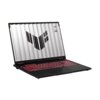
- Écran 16.0" LCD - IPS (anti-reflets) 165 Hz
- Résolution QHD 2560 x 1600 pixels (16/10)
- Sans système
- AMD Ryzen 7 260 (8 coeurs x 5.10 GHz)
- Nvidia RTX 5060 (mobile) (8 Go)
Version : 2547 MHz / 115 W - 16 Go DDR5 - 5600 MHz
- 512 Go (SSD M.2 PCI-e 4.0)
-

Asus TUF Gaming A16 (2024) TUF608UM-DRFQT060W (Ryzen 7 / RTX 5060 / 16 Go / 512 Go)
- Écran 16.0" LCD - IPS (anti-reflets) 165 Hz
- Résolution QHD 2560 x 1600 pixels (16/10)
- Sans système
- AMD Ryzen 7 260 (8 coeurs x 5.10 GHz)
- Nvidia RTX 5060 (mobile) (8 Go)
Version : 2547 MHz / 115 W - 16 Go DDR5 - 5600 MHz
- 512 Go (SSD M.2 PCI-e 4.0)
-

Asus TUF Gaming A16 (2024) TUF608JMR-RV056W (Core i7 / RTX 5060 / 16 Go / 1 To)
- Écran 16.0" LCD - IPS (anti-reflets) 165 Hz
- Résolution Full HD 1920 x 1200 pixels (16/10)
- Windows 11 Famille
- Intel Core i7-14650HX (16 coeurs x 5.20 GHz)
- Nvidia RTX 5060 (mobile) (8 Go)
Version : 2547 MHz / 115 W - 16 Go DDR5 - 5600 MHz
- 1 To (SSD M.2 PCI-e 4.0)
-

Asus TUF Gaming A16 (2024) A16 608UH-RV053W (Ryzen 7 / RTX 5060 / 16 Go / 512 Go)
- Écran 16.0" LCD - IPS (anti-reflets) 165 Hz
- Résolution Full HD 1920 x 1200 pixels (16/10)
- Windows 11 Famille
- AMD Ryzen 7 260 (8 coeurs x 5.10 GHz)
- Nvidia RTX 5060 (mobile) (8 Go)
Version : 2547 MHz / 115 W - 16 Go DDR5 - 5600 MHz
- 512 Go (SSD M.2 PCI-e 4.0)
-

Asus TUF Gaming A16 (2024) TUF608JMR-RV095W (Core i7 / RTX 5060 / 32 Go / 512 Go)
- Écran 16.0" LCD - IPS (anti-reflets) 165 Hz
- Résolution Full HD 1920 x 1200 pixels (16/10)
- Windows 11 Famille
- Intel Core i7-14650HX (16 coeurs x 5.20 GHz)
- Nvidia RTX 5060 (mobile) (8 Go)
Version : 2547 MHz / 115 W - 32 Go DDR5 - 5600 MHz
- 512 Go (SSD M.2 PCI-e 4.0)
-

Asus TUF Gaming A16 (2024) TUF608PP-RV067W (Ryzen 9 / RTX 5070 / 32 Go / 1 To)
- Écran 16.0" LCD - IPS (anti-reflets) 165 Hz
- Résolution Full HD 1920 x 1200 pixels (16/10)
- Windows 11 Famille
- AMD Ryzen AI 9 HX 370 (12 coeurs x 5.10 GHz)
- Nvidia GeForce RTX 5070 (mobile) (8 Go)
- 32 Go LPDDR5X - 7500 MHz
- 1 To (SSD M.2 PCI-e 4.0)
-

Asus TUF Gaming A16 TUF608JH-RV073W
- Écran 16.0" LCD - IPS (anti-reflets) 165 Hz
- Résolution Full HD 1920 x 1080 pixels (16/9)
- Windows 11 Famille
- Intel Core i5-13450HX (10 coeurs x 4.50 GHz)
- Nvidia RTX 5050 (mobile) (8 Go)
- 16 Go DDR5 - 4800 MHz
- 512 Go (SSD M.2 PCI-e 4.0)
-

Asus TUF Gaming A16 (2024) TUF608UM-RV080W (Ryzen 7 / RTX 5060 / 16 Go / 512 Go)
- Écran 16.0" LCD - IPS (anti-reflets) 60 Hz
- Résolution Full HD 1920 x 1200 pixels (16/10)
- Windows 11 Famille
- AMD Ryzen 7 260 (8 coeurs x 5.10 GHz)
- Nvidia RTX 5060 (mobile) (8 Go)
- 16 Go DDR5 - 5600 MHz
- 512 Go (SSD M.2 PCI-e 4.0)
Suggestions
-

LG 32GX850A-B
- Écran gaming 32.0" OLED
- Résolution 4K UHD 3840 x 2160 pixels (16/9)
- 165 Hz
- 250 cd/m²
- Ajustable en hauteur. Inclinable. Rotatif horizontalement. Pivotant verticalement.
- AMD FreeSync Premium Pro, HDR10, Nvidia G-Sync, TÜV Rheinland Flicker Free, TÜV Rheinland Low Blue Light
-

Samsung Odyssey OLED G8 G81SF LS32FG810SUXEN
- Écran gaming 32.0" OLED
- Résolution 4K UHD 3840 x 2160 pixels (16/9)
- 240 Hz
- 260 cd/m²
- Ajustable en hauteur. Inclinable. Rotatif horizontalement. Pivotant verticalement.
- AMD FreeSync Premium Pro, HDR10+ Gaming, Nvidia G-Sync, TÜV Rheinland Flicker Free, VESA DisplayHDR 400 True Black
-

Samsung Odyssey G8 G81SF LS27FG810SUXEN
- Écran gaming 27.0" OLED
- Résolution 4K UHD 3840 x 2160 pixels (16/9)
- 240 Hz
- 250 cd/m²
- Ajustable en hauteur. Inclinable. Rotatif horizontalement. Pivotant verticalement.
- AMD FreeSync Premium Pro, HDR10+ Gaming, Nvidia G-Sync, TÜV Rheinland Flicker Free, VESA DisplayHDR 400 True Black
-

Lenovo Legion Pro 32UD-10 (69D0GACBEU)
- Écran gaming 31.5" OLED
- Résolution 4K UHD 3840 x 2160 pixels (16/9)
- 240 Hz
- 250 cd/m²
- Incurvé 800 R
- Ajustable en hauteur. Inclinable. Rotatif horizontalement.
- AMD FreeSync Premium Pro, Eyesafe Certified, HDR10, TÜV Rheinland Eye comfort, TÜV Rheinland Flicker Free
-

Asus ROG Strix OLED XG32UCWMG
- Écran gaming 31.5" OLED
- Résolution 4K UHD 3840 x 2160 pixels (16/9)
- 240 Hz
- 1300 cd/m²
- Ajustable en hauteur. Inclinable. Rotatif horizontalement.
- AMD FreeSync Premium Pro, HDR10, Nvidia G-Sync, TÜV Rheinland Flicker Free, TÜV Rheinland Low Blue Light
-

Asus ROG Swift OLED PG32UCDMR
- Écran gaming 31.5" OLED
- Résolution 4K UHD 3840 x 2160 pixels (16/9)
- 240 Hz
- 10000 cd/m²
- Ajustable en hauteur. Inclinable. Rotatif horizontalement.
- AMD FreeSync Premium Pro, HDR10, Nvidia G-Sync, TÜV Rheinland Flicker Free, VESA Adaptive-Sync
-

Samsung Odyssey G7 G75F LS40FG756EUXEN
- Écran gaming 40.0" VA
- Résolution 5K 5120 x 2160 pixels (21/9)
- 180 Hz
- 350 cd/m²
- Incurvé 1000 R
- Ajustable en hauteur. Inclinable. Rotatif horizontalement.
- AMD FreeSync Premium Pro, TÜV Rheinland Flicker Free, VESA DisplayHDR 600
-

Samsung Odyssey G60SF QHD 500Hz
- Écran gaming 27.0" OLED
- Résolution QHD 2560 x 1440 pixels (16/9)
- 500 Hz
- 300 cd/m²
- Ajustable en hauteur. Inclinable. Rotatif horizontalement. Pivotant verticalement.
- AMD FreeSync Premium Pro, Nvidia G-Sync, TÜV Rheinland Flicker Free, VESA DisplayHDR 500 True Black
-

MSI MAG 272QP QD-OLED
- Écran gaming 26.5" OLED
- Résolution QHD 2560 x 1440 pixels (16/9)
- 500 Hz
- 500 cd/m²
- Ajustable en hauteur. Inclinable. Rotatif horizontalement. Pivotant verticalement.
- AMD FreeSync Premium Pro, VESA DisplayHDR 400 True Black
-

LG 49U950A-W
- Écran gaming 49.0" Nano IPS
- Résolution 5K 5120 x 2160 pixels (21/9)
- 144 Hz
- 400 cd/m²
- Ajustable en hauteur. Inclinable. Rotatif horizontalement.
- AMD FreeSync Premium Pro, HDR10, Nvidia G-Sync, TÜV Rheinland Flicker Free, TÜV Rheinland Low Blue Light
Remarque
Les informations techniques présentes sur cette fiche sont fournies à titre indicatif. Elles sont compilées à partir de données techniques mises à disposition librement (site du fabricant, revendeurs, PDF du produit, etc.). Nous mettons tout en œuvre pour vous apporter les indications les plus justes. Cependant, nous ne pouvons garantir qu'il n'y ait aucune erreur. Il appartient donc à chacun de vérifier les informations avant son achat, soit en prenant contact avec le site marchand, ou en se référant au site du constructeur. Si vous constatez une erreur sur cette fiche, merci de nous le signaler afin que nous puissions corriger ces informations.
Dans la même gamme
-

Asus TUF Gaming A16 (2024) TUF617NS-RN3003
- Écran 16.0" LCD - IPS (anti-reflets) 165 Hz
- Résolution Full HD 1920 x 1200 pixels (16/10)
- Sans système
- AMD Ryzen 7 7435HS (8 coeurs x 4.50 GHz)
- AMD Radeon RX 7600S (8 Go)
- 16 Go DDR5 - 4800 MHz
- 512 Go (SSD M.2 PCI-e 4.0)
-

Asus TUF Gaming A16 (2024) FA608WI-QT012W
- Écran 16.0" LCD - IPS (anti-reflets) 165 Hz
- Résolution QHD 2560 x 1600 pixels (16/10)
- Windows 11 Famille
- AMD Ryzen AI 9 HX 370 (12 coeurs x 5.10 GHz)
- Nvidia GeForce RTX 4070 (Mobile) (8 Go)
Version : 2225 MHz / 140 W - 32 Go LPDDR5X - 7500 MHz
- 1 To (SSD M.2 PCI-e 4.0)
-

Asus TUF Gaming A16 (2024) TUF607NU-RL109 (Ryzen 5 / RTX 4050 / 16 Go / 512 Go / Sans OS)
- Écran 16.0" LCD - IPS (anti-reflets) 144 Hz
- Résolution Full HD 1920 x 1200 pixels (16/10)
- Sans système
- AMD Ryzen 5 7535HS (6 coeurs x 4.55 GHz)
- Nvidia GeForce RTX 4050 (Mobile) (6 Go)
Version : 1681 MHz / 140 W - 16 Go DDR5 - 4800 MHz
- 512 Go (SSD M.2 PCI-e 3.0)
-

Asus TUF Gaming A16 (2024) TUF608PP-DRFQT049W (Ryzen 9 / RTX 5070 / 16 Go / 1 To)
- Écran 16.0" LCD - IPS (anti-reflets) 165 Hz
- Résolution QHD 2560 x 1600 pixels (16/10)
- Windows 11 Famille
- AMD Ryzen AI 9 HX 370 (12 coeurs x 5.10 GHz)
- Nvidia GeForce RTX 5070 (mobile) (8 Go)
- 16 Go LPDDR5X - 7500 MHz
- 1 To (SSD M.2 PCI-e 4.0)
-

Asus TUF Gaming A16 (2024) TUF608PP-DRQT041W (Ryzen 9 / RTX 5070 / 16 Go / 1 To)
- Écran 16.0" LCD - IPS (anti-reflets) 165 Hz
- Résolution QHD 2560 x 1600 pixels (16/10)
- Windows 11 Famille
- AMD Ryzen AI 9 HX 370 (12 coeurs x 5.10 GHz)
- Nvidia GeForce RTX 5070 (mobile) (8 Go)
- 16 Go LPDDR5X - 7500 MHz
- 1 To (SSD M.2 PCI-e 4.0)
-

Asus TUF Gaming A16 (2024) TUF608JMR-DRFV054W (Core i7 / RTX 5060 / 16 Go / 1 To)
- Écran 16.0" LCD - IPS (anti-reflets) 165 Hz
- Résolution Full HD 1920 x 1200 pixels (16/10)
- Windows 11 Famille
- Intel Core i7-14650HX (16 coeurs x 5.20 GHz)
- Nvidia RTX 5060 (mobile) (8 Go)
Version : 2547 MHz / 115 W - 16 Go DDR5 - 5600 MHz
- 1 To (SSD M.2 PCI-e 4.0)
-

Asus TUF Gaming TUF607VU-RL021W
- Écran 16.0" LCD - IPS (anti-reflets) 144 Hz
- Résolution Full HD 1920 x 1200 pixels (16/10)
- Windows 11 Famille
- Intel Core 5 210H (8 coeurs x 4.80 GHz)
- Nvidia GeForce RTX 4050 (Mobile) (6 Go)
- 16 Go DDR5 - 5600 MHz
- 1 To (SSD M.2 PCI-e 4.0)
-

Asus TUF Gaming A16 (2024) TUF608UM-DRQT050W (Ryzen 7 / RTX 5060 / 16 Go / 512 Go)
- Écran 16.0" LCD - IPS (anti-reflets) 165 Hz
- Résolution QHD 2560 x 1600 pixels (16/10)
- Sans système
- AMD Ryzen 7 260 (8 coeurs x 5.10 GHz)
- Nvidia RTX 5060 (mobile) (8 Go)
Version : 2547 MHz / 115 W - 16 Go DDR5 - 5600 MHz
- 512 Go (SSD M.2 PCI-e 4.0)
-

Asus TUF Gaming A16 (2024) TUF608UM-DRFQT060W (Ryzen 7 / RTX 5060 / 16 Go / 512 Go)
- Écran 16.0" LCD - IPS (anti-reflets) 165 Hz
- Résolution QHD 2560 x 1600 pixels (16/10)
- Sans système
- AMD Ryzen 7 260 (8 coeurs x 5.10 GHz)
- Nvidia RTX 5060 (mobile) (8 Go)
Version : 2547 MHz / 115 W - 16 Go DDR5 - 5600 MHz
- 512 Go (SSD M.2 PCI-e 4.0)
-

Asus TUF Gaming A16 (2024) TUF608JMR-RV056W (Core i7 / RTX 5060 / 16 Go / 1 To)
- Écran 16.0" LCD - IPS (anti-reflets) 165 Hz
- Résolution Full HD 1920 x 1200 pixels (16/10)
- Windows 11 Famille
- Intel Core i7-14650HX (16 coeurs x 5.20 GHz)
- Nvidia RTX 5060 (mobile) (8 Go)
Version : 2547 MHz / 115 W - 16 Go DDR5 - 5600 MHz
- 1 To (SSD M.2 PCI-e 4.0)
-

Asus TUF Gaming A16 (2024) A16 608UH-RV053W (Ryzen 7 / RTX 5060 / 16 Go / 512 Go)
- Écran 16.0" LCD - IPS (anti-reflets) 165 Hz
- Résolution Full HD 1920 x 1200 pixels (16/10)
- Windows 11 Famille
- AMD Ryzen 7 260 (8 coeurs x 5.10 GHz)
- Nvidia RTX 5060 (mobile) (8 Go)
Version : 2547 MHz / 115 W - 16 Go DDR5 - 5600 MHz
- 512 Go (SSD M.2 PCI-e 4.0)
-

Asus TUF Gaming A16 (2024) TUF608JMR-RV095W (Core i7 / RTX 5060 / 32 Go / 512 Go)
- Écran 16.0" LCD - IPS (anti-reflets) 165 Hz
- Résolution Full HD 1920 x 1200 pixels (16/10)
- Windows 11 Famille
- Intel Core i7-14650HX (16 coeurs x 5.20 GHz)
- Nvidia RTX 5060 (mobile) (8 Go)
Version : 2547 MHz / 115 W - 32 Go DDR5 - 5600 MHz
- 512 Go (SSD M.2 PCI-e 4.0)
-

Asus TUF Gaming A16 (2024) TUF608PP-RV067W (Ryzen 9 / RTX 5070 / 32 Go / 1 To)
- Écran 16.0" LCD - IPS (anti-reflets) 165 Hz
- Résolution Full HD 1920 x 1200 pixels (16/10)
- Windows 11 Famille
- AMD Ryzen AI 9 HX 370 (12 coeurs x 5.10 GHz)
- Nvidia GeForce RTX 5070 (mobile) (8 Go)
- 32 Go LPDDR5X - 7500 MHz
- 1 To (SSD M.2 PCI-e 4.0)
-

Asus TUF Gaming A16 TUF608JH-RV073W
- Écran 16.0" LCD - IPS (anti-reflets) 165 Hz
- Résolution Full HD 1920 x 1080 pixels (16/9)
- Windows 11 Famille
- Intel Core i5-13450HX (10 coeurs x 4.50 GHz)
- Nvidia RTX 5050 (mobile) (8 Go)
- 16 Go DDR5 - 4800 MHz
- 512 Go (SSD M.2 PCI-e 4.0)
-

Asus TUF Gaming A16 (2024) TUF608UM-RV080W (Ryzen 7 / RTX 5060 / 16 Go / 512 Go)
- Écran 16.0" LCD - IPS (anti-reflets) 60 Hz
- Résolution Full HD 1920 x 1200 pixels (16/10)
- Windows 11 Famille
- AMD Ryzen 7 260 (8 coeurs x 5.10 GHz)
- Nvidia RTX 5060 (mobile) (8 Go)
- 16 Go DDR5 - 5600 MHz
- 512 Go (SSD M.2 PCI-e 4.0)
Suggestions
-

LG 32GX850A-B
- Écran gaming 32.0" OLED
- Résolution 4K UHD 3840 x 2160 pixels (16/9)
- 165 Hz
- 250 cd/m²
- Ajustable en hauteur. Inclinable. Rotatif horizontalement. Pivotant verticalement.
- AMD FreeSync Premium Pro, HDR10, Nvidia G-Sync, TÜV Rheinland Flicker Free, TÜV Rheinland Low Blue Light
-

Samsung Odyssey OLED G8 G81SF LS32FG810SUXEN
- Écran gaming 32.0" OLED
- Résolution 4K UHD 3840 x 2160 pixels (16/9)
- 240 Hz
- 260 cd/m²
- Ajustable en hauteur. Inclinable. Rotatif horizontalement. Pivotant verticalement.
- AMD FreeSync Premium Pro, HDR10+ Gaming, Nvidia G-Sync, TÜV Rheinland Flicker Free, VESA DisplayHDR 400 True Black
-

Samsung Odyssey G8 G81SF LS27FG810SUXEN
- Écran gaming 27.0" OLED
- Résolution 4K UHD 3840 x 2160 pixels (16/9)
- 240 Hz
- 250 cd/m²
- Ajustable en hauteur. Inclinable. Rotatif horizontalement. Pivotant verticalement.
- AMD FreeSync Premium Pro, HDR10+ Gaming, Nvidia G-Sync, TÜV Rheinland Flicker Free, VESA DisplayHDR 400 True Black
-

Lenovo Legion Pro 32UD-10 (69D0GACBEU)
- Écran gaming 31.5" OLED
- Résolution 4K UHD 3840 x 2160 pixels (16/9)
- 240 Hz
- 250 cd/m²
- Incurvé 800 R
- Ajustable en hauteur. Inclinable. Rotatif horizontalement.
- AMD FreeSync Premium Pro, Eyesafe Certified, HDR10, TÜV Rheinland Eye comfort, TÜV Rheinland Flicker Free
-

Asus ROG Strix OLED XG32UCWMG
- Écran gaming 31.5" OLED
- Résolution 4K UHD 3840 x 2160 pixels (16/9)
- 240 Hz
- 1300 cd/m²
- Ajustable en hauteur. Inclinable. Rotatif horizontalement.
- AMD FreeSync Premium Pro, HDR10, Nvidia G-Sync, TÜV Rheinland Flicker Free, TÜV Rheinland Low Blue Light
-

Asus ROG Swift OLED PG32UCDMR
- Écran gaming 31.5" OLED
- Résolution 4K UHD 3840 x 2160 pixels (16/9)
- 240 Hz
- 10000 cd/m²
- Ajustable en hauteur. Inclinable. Rotatif horizontalement.
- AMD FreeSync Premium Pro, HDR10, Nvidia G-Sync, TÜV Rheinland Flicker Free, VESA Adaptive-Sync
-

Samsung Odyssey G7 G75F LS40FG756EUXEN
- Écran gaming 40.0" VA
- Résolution 5K 5120 x 2160 pixels (21/9)
- 180 Hz
- 350 cd/m²
- Incurvé 1000 R
- Ajustable en hauteur. Inclinable. Rotatif horizontalement.
- AMD FreeSync Premium Pro, TÜV Rheinland Flicker Free, VESA DisplayHDR 600
-

Samsung Odyssey G60SF QHD 500Hz
- Écran gaming 27.0" OLED
- Résolution QHD 2560 x 1440 pixels (16/9)
- 500 Hz
- 300 cd/m²
- Ajustable en hauteur. Inclinable. Rotatif horizontalement. Pivotant verticalement.
- AMD FreeSync Premium Pro, Nvidia G-Sync, TÜV Rheinland Flicker Free, VESA DisplayHDR 500 True Black
-

MSI MAG 272QP QD-OLED
- Écran gaming 26.5" OLED
- Résolution QHD 2560 x 1440 pixels (16/9)
- 500 Hz
- 500 cd/m²
- Ajustable en hauteur. Inclinable. Rotatif horizontalement. Pivotant verticalement.
- AMD FreeSync Premium Pro, VESA DisplayHDR 400 True Black
-

LG 49U950A-W
- Écran gaming 49.0" Nano IPS
- Résolution 5K 5120 x 2160 pixels (21/9)
- 144 Hz
- 400 cd/m²
- Ajustable en hauteur. Inclinable. Rotatif horizontalement.
- AMD FreeSync Premium Pro, HDR10, Nvidia G-Sync, TÜV Rheinland Flicker Free, TÜV Rheinland Low Blue Light
Commentaires
Une question sur cette référence ou besoin d'aide pour faire votre choix ?
Laissez-nous un commentaire, nous vous répondrons dès que possible :
- Vous n'avez pas besoin d'être inscrit pour commenter
- Le langage texto (SMS) est formellement interdit, limitez l'usage des abréviations
- Les commentaires publicitaires seront supprimés
- Pour signaler une faute ou une erreur sur les caractéristiques de ce produit, contactez-nous par mail